
Big Walk

2M+
Installs
House House
Developer
-
Adventure
Category
-
14
Content Rating
-
help@bigwalk.game
Developer Email
-
https://bigwalk.game/privacy/
Privacy Policy
Screenshots


editor reviews
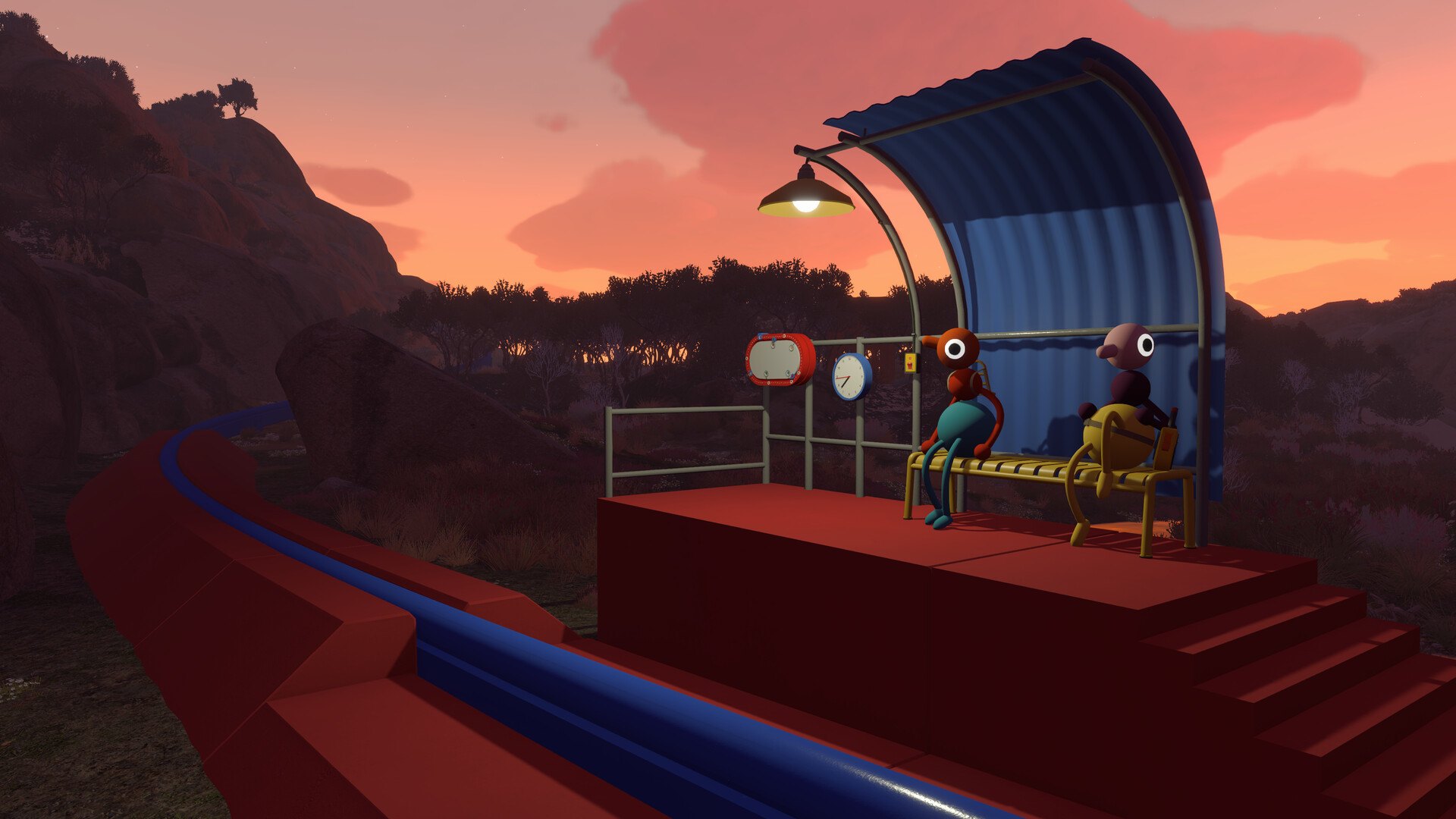
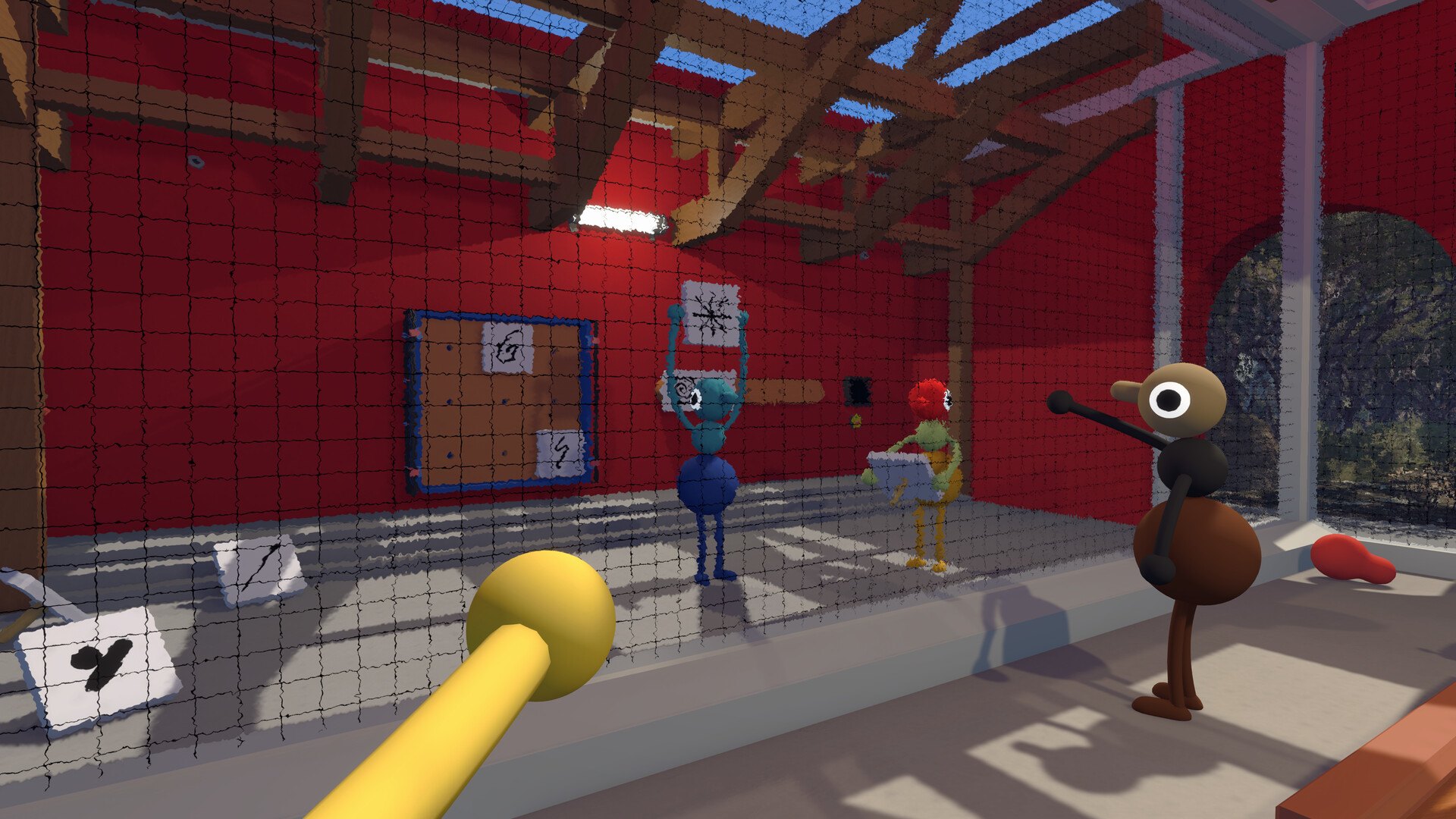
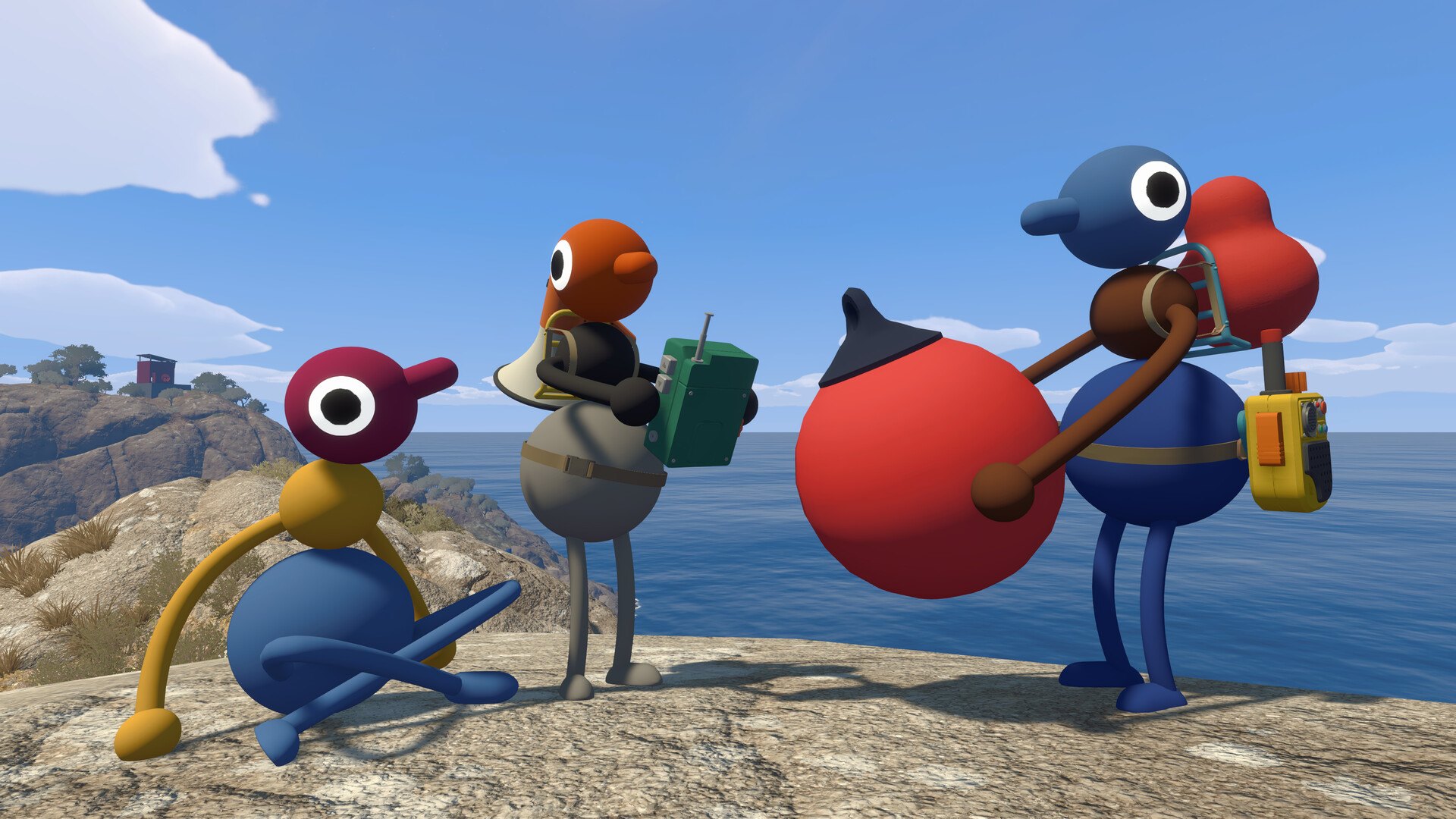
Big Walk is a cooperative open-world puzzle adventure game, and the first thing that hit me when I loaded it up was how much it trusts you to slow down. I went in expecting something snappy, maybe a quick hour of puzzles, but within the first twenty minutes I was just standing on a cliff edge watching my friend try to stack a traffic cone on a wobbling fence. You play as one of a small group of walkers dropped into a wide, quiet coastal-ish landscape with very little hand-holding. The tone is silly but calm, kind of like a hiking trip where everyone keeps getting distracted. It is built for people who enjoy talking things through with friends rather than chasing a scoreboard. Big Walk is the work of House House, the studio behind Untitled Goose Game, and you can feel that same sense of mischief in the physics and the way the world reacts to you. As for platforms, I know it has been tied to PC and console storefronts, though I would check your own store page for the exact launch timing and any mobile version before you assume you can grab it on your phone. I have not seen a proper Android or Google Play listing, so mobile players should temper expectations rather than expect a quick download.
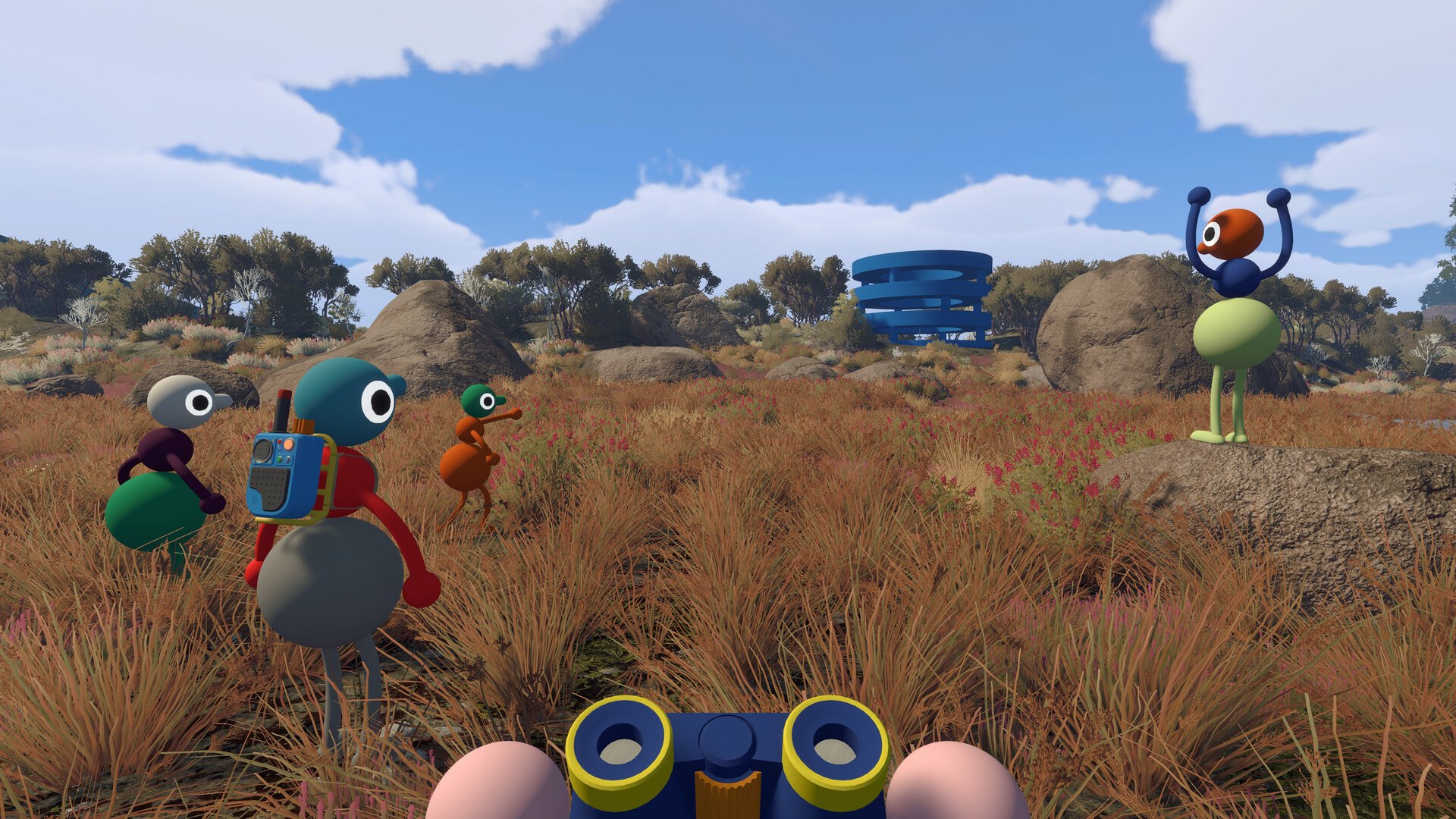
The core loop in Big Walk is traversal plus cooperation. You and up to three friends wander a big map, and progress usually comes from figuring out how to get somewhere or how to move something together. There is no combat to speak of, which is a nice change of pace if you are tired of shooters. The controls are simple on paper, walk, jump, grab, point, but the worlds are built so that a simple grab turns into a fifteen-minute argument about who should let go first. Puzzles are physical rather than menu-based, so you might need to build a bridge out of planks, lure something with a noise, or use a friend as a counterweight. What I liked most was the pointing system. You can ping objects for your team, and it quietly encourages real conversation instead of shouting coordinates. It takes a little time to get used to how floaty the characters feel, and some jumps are more forgiving than others, but once it clicks the movement itself becomes the fun part. The map has enough little secrets and odd landmarks that wandering off is rewarded, and the game never punishes you hard for messing around.
Compared with other co-op puzzlers, Big Walk sits closer to something like Pico Park or the co-op sections of It Takes Two, but it is much looser and less scripted. Pico Park is quick, frantic, and level-based, while Big Walk lets you breathe and go off-route. It Takes Two pushes you through a story with constant new mechanics, whereas Big Walk leans on emergent moments, the kind you end up telling friends about later. If you have played Human: Fall Flat, the wobbly physics and goofy cooperation will feel familiar, but Big Walk feels calmer and more about exploration than obstacle courses. That means some players who want tight challenges or constant rewards may find it too meandering. For groups that like to chat and solve things at their own pace, that slower rhythm is exactly the pull.
features
- Walk and grab controls 🎮 Keep things simple, but physics make every grab and jump feel a little unpredictable, which is where the chaos comes from.
- Pointing system 📍 You can mark objects for teammates, and it works better than voice chat alone when everyone is spread across the map.
- Open-ended maps 🗺️ There is no strict path most of the time, so exploring side areas and odd landmarks is part of the fun rather than a detour.
- Group progression 👥 Puzzles need real cooperation, so progress feels shared instead of one person carrying the team like in some faster co-op games.
pros
- Movement and physics feel playful in a way that makes even failed attempts funny.
- Replay value comes from your friends, not from unlock trees, so each session can go differently.
- Visual style and sound design stay calm and readable, which suits long relaxed sessions.
- Beginner-friendly controls mean new players can join without a tutorial marathon.
cons
- The floaty controls can make precise jumps frustrating when you are tired.
- Puzzle pacing may feel slow for groups that want constant action.
- Limited information on mobile availability, so phone players may be left out.
- Playing solo or with quiet friends loses a lot of the charm compared with a full group.
Recommended Apps
![]()
Fridge Horror Game
Honor apps4.5

![]()
3D Bolt Master™
Joymaster Puzzle Game Studio4.9![]()
aquapark.io
VOODOO4.2![]()
Garten of Banban 4
Euphoric Brothers Games4.3![]()
Last Z: Survival Shooter
Florere Game4.6![]()
AnimA ARPG (Action RPG)
Redeev4.4![]()
QuizUp
Dragon's Games1.8![]()
PAW Patrol Rescue World
Budge Studios4.2![]()
Halloween Chronicles 2 f2p
Do Games Limited4.6![]()
Arrow Puzzle: Tap Puzzle Games
Easybrain4.8![]()
Prediction Filter Challenge
GjangHa2.5![]()
Obby Survival Parkour Game
PLAYTRICKS STUDIO LLC0![]()
Mafia City RP:Grand Open World
Universe Game Labs4.6![]()
Big Walk
House House0![]()
TROLLHEIM: GNOMES
Trollheim0













Hot Apps
-
![]()
Google Gemini
Google LLC4.6 -
![]()
Pinterest
Pinterest4.5 -
![]()
Afterpay - Buy Now Pay Later
Afterpay3.8 -
![]()
Zoom - One Platform to Connect
zoom.us4.1 -
![]()
PolyBuzz: Chat with AI Friends
CLOUD WHALE INTERACTIVE TECHNOLOGY LLC.3.8 -
![]()
Facebook
Meta Platforms, Inc.4 -
![]()
GroupMe
GroupMe4.5 -
![]()
Chai: Chat AI Platform
Chai Research Corp.4.3 -
![]()
Wise: International Transfers
Wise Payments Ltd.4.7 -
![]()
Google Pay
Google LLC4.4 -
![]()
Signal Private Messenger
Signal Foundation4.5 -
![]()
Snapchat
Snap Inc4.1 -
![]()
Google Chrome: Fast & Secure
Google LLC4.1 -
![]()
Netflix
Netflix, Inc.3.9 -
![]()
WhatsApp Messenger
WhatsApp LLC4.5 -
![]()
Affirm: Buy now, pay over time
Affirm, Inc4.7 -
![]()
ChatOn - AI Chat Bot Assistant
AIBY Inc.4.4 -
![]()
Pandora - Music & Podcasts
Pandora4.1 -
![]()
Cash App
Block, Inc.4.6 -
![]()
Geeni
Merkury Innovations4.6 -
![]()
Hulu: Stream TV shows & movies
Disney4.5 -
![]()
Amazon Fire TV
Amazon Mobile LLC4.1 -
![]()
Microsoft Teams
Microsoft Corporation4.6 -
![]()
PayByPhone
PayByPhone Technologies Inc .4.9 -
![]()
Ticketmaster-Buy, Sell Tickets
Ticketmaster L.L.C.3 -
![]()
GasBuddy: Find & Pay for Gas
PDI Software, Inc.3.1 -
![]()
Snapmint: Buy Now, Pay in EMIs
Snapmint4.5 -
![]()
Duolingo: Language & Chess
Duolingo4.7 -
![]()
Venmo
PayPal, Inc.4.2 -
![]()
ChatBot - AI Chat
X PhotoKit4.5