
Gorilla Tag

2M+
Installs
Another Axiom Inc.
Developer
-
Aciton
Category
-
14
Content Rating
-
info@anotheraxiom.com
Developer Email
-
https://gorillatagvr.com/privacy-policy
Privacy Policy
Screenshots




editor reviews
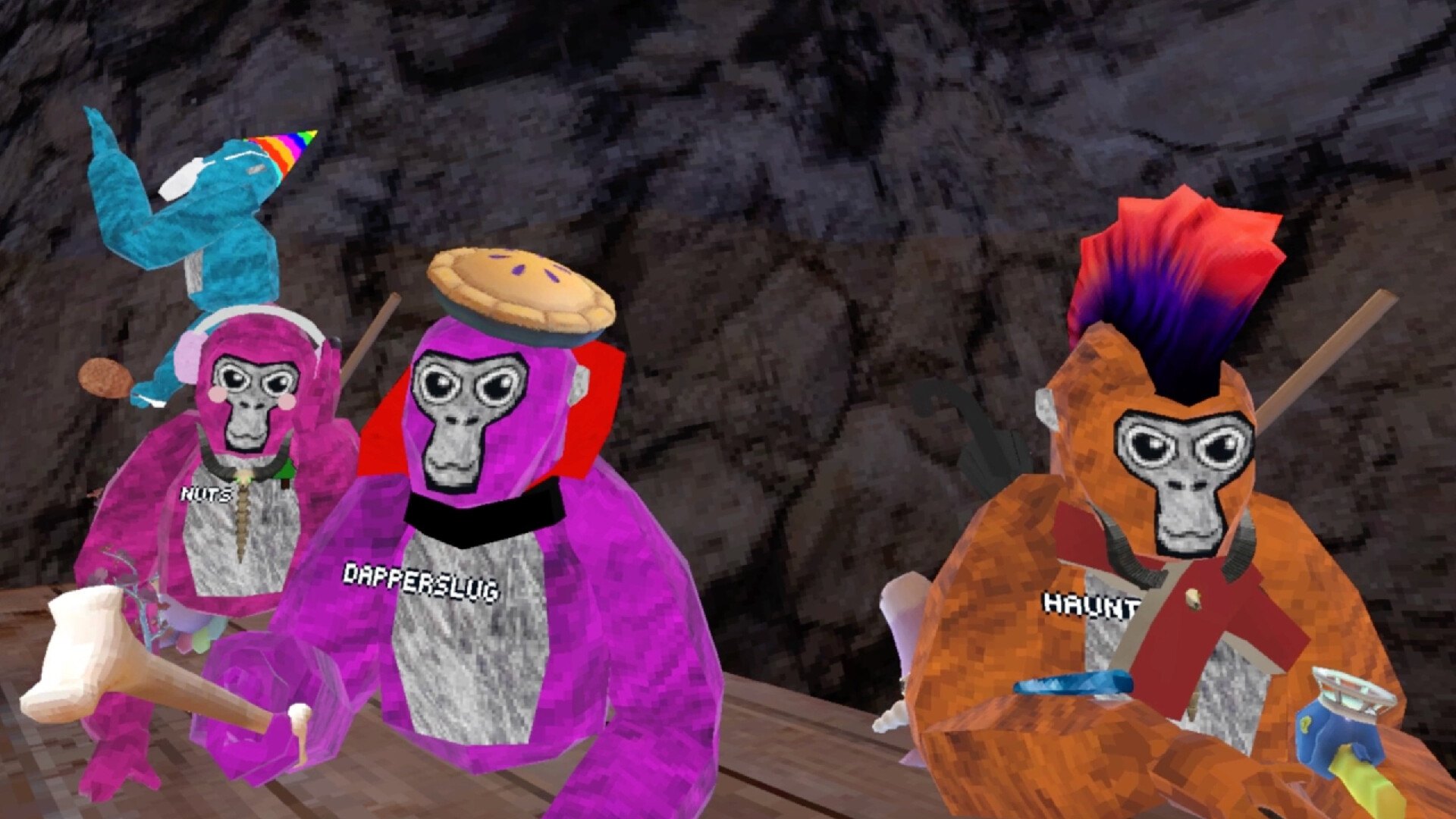
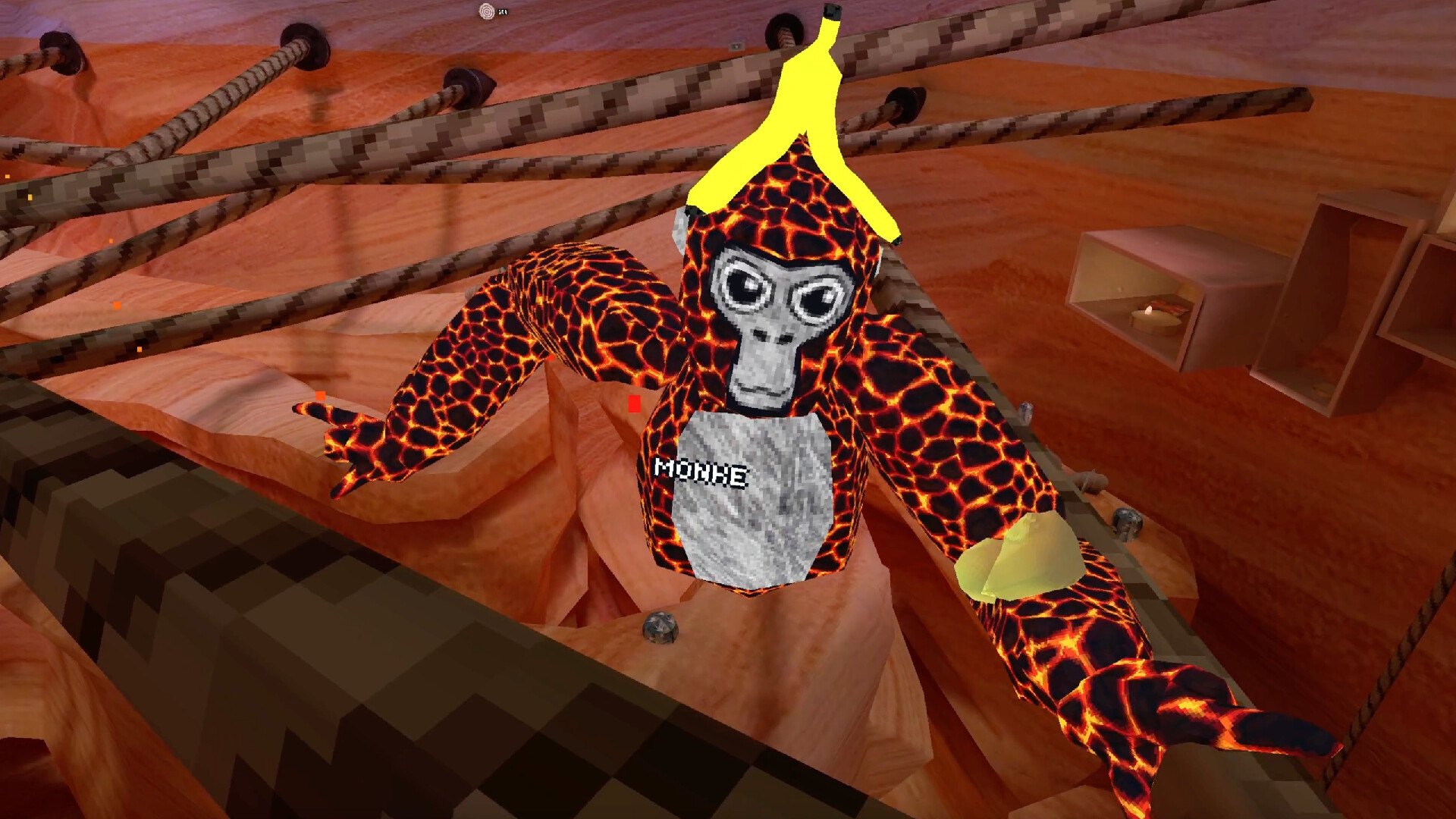
Gorilla Tag is a VR multiplayer movement game, and the first thing you notice is that there is no jump button, no sprint button, and honestly no easy way to explain it to someone who has not put a headset on. You move by pushing your hands against the ground, walls, and trees, and your arms become your legs. I went in expecting a silly gimmick and came out sweating after twenty minutes of chasing strangers around a forest. The game comes from Another Axiom Inc and it is built around VR motion controls, so it lives on headsets rather than on a phone or a standard console setup. There is a free version that many people start with, and some content and cosmetics are tied to in-game purchases, though I would not call the shop aggressive. It fits players who like social chaos, quick sessions, and the strange satisfaction of learning a movement system that feels like nothing else. If you have ever watched a video of someone swinging through trees like an ape and thought that looks dumb but fun, that is exactly the experience.
The core loop is simple on paper and messy in practice. You launch into a forest lobby, see other gorillas bouncing around, and then you just try to keep up. Pushing off surfaces gives you speed, and the timing of your arm swings matters more than raw force. My first ten minutes were a disaster. I kept face-planting into rocks, and I could not figure out why other players were launching themselves across the map while I could barely climb a wall. Once the motion clicked, though, the game opened up. Tag matches are the obvious draw, but a lot of the fun comes from messing around, climbing structures, and finding routes that other players do not expect. There are different maps and modes over time, and cosmetics give you something to chase without turning the whole thing into a grind. The controls are the real skill ceiling. You are not pressing buttons to dodge, you are physically moving your hands and body, which makes every close escape feel earned. I personally enjoyed the social side the most, because a lobby full of random gorillas shouting and chasing each other creates stories you cannot script.
Compared with other VR social games, Gorilla Tag feels rougher and more physical. Rec Room gives you more structured activities and a cleaner interface, and VRChat leans much harder into hanging out and custom worlds. Gorilla Tag sits somewhere between a sport and a playground. It does not hold your hand, the tutorial is thin, and the community can be loud, but that is also why some players stick with it. The movement system is the whole identity here, and once you learn it, going back to standard VR locomotion feels stiff. It is not the most polished headset experience I have tried, and performance can vary depending on your device and connection, but the freedom of swinging through a map with a group of strangers is hard to match. If you want a tidy, guided VR game, this may frustrate you. If you want to earn your movement and laugh at yourself while doing it, it is worth a try.
features
- Arm-based movement 👋 Pushing off surfaces with your hands is the entire control scheme, and it makes traversal feel physical rather than menu-driven. It takes practice, but the payoff is real speed and control.
- Social lobbies 🦍 Public rooms fill with players climbing, chasing, and messing around, so even a short session turns into something unpredictable. It is closer to a playground than a matchmade shooter.
- Tag modes and maps 🗺️ Classic tag and variant modes keep the loop focused, and different maps change how you move and where you can hide. Route knowledge matters as much as fast arms.
- Cosmetic unlocks 🎩 Hats and cosmetics give you small goals to chase, and earning them through play feels fair enough without demanding money.
pros
- The movement is genuinely satisfying once it clicks, and no other VR game feels quite like swinging yourself across a map.
- Short sessions work well, so you can hop in for a few tag rounds without a long commitment.
- Lobbies are lively and full of player-made moments, which gives the game replay value beyond the basic rules.
- The simple visual style runs cleanly on many headsets and keeps the focus on movement and other players.
cons
- The learning curve is steep, and new players may spend their first sessions falling behind without much guidance.
- Public lobbies can get loud and chaotic, which is fun in small doses but not always relaxing.
- Content depth depends on the maps and modes available, and some players may want more structured goals.
- Performance and comfort vary by headset, and long sessions can be physically tiring.
Recommended Apps
![]()
Fridge Horror Game
Honor apps4.5

![]()
3D Bolt Master™
Joymaster Puzzle Game Studio4.9![]()
aquapark.io
VOODOO4.2![]()
Garten of Banban 4
Euphoric Brothers Games4.3![]()
Last Z: Survival Shooter
Florere Game4.6![]()
AnimA ARPG (Action RPG)
Redeev4.4![]()
QuizUp
Dragon's Games1.8![]()
PAW Patrol Rescue World
Budge Studios4.2![]()
Halloween Chronicles 2 f2p
Do Games Limited4.6![]()
Arrow Puzzle: Tap Puzzle Games
Easybrain4.8![]()
Prediction Filter Challenge
GjangHa2.5![]()
Obby Survival Parkour Game
PLAYTRICKS STUDIO LLC0![]()
Mafia City RP:Grand Open World
Universe Game Labs4.6![]()
Big Walk
House House0![]()
TROLLHEIM: GNOMES
Trollheim0















Hot Apps
-
![]()
Google Gemini
Google LLC4.6 -
![]()
Pinterest
Pinterest4.5 -
![]()
Afterpay - Buy Now Pay Later
Afterpay3.8 -
![]()
Zoom - One Platform to Connect
zoom.us4.1 -
![]()
PolyBuzz: Chat with AI Friends
CLOUD WHALE INTERACTIVE TECHNOLOGY LLC.3.8 -
![]()
Facebook
Meta Platforms, Inc.4 -
![]()
GroupMe
GroupMe4.5 -
![]()
Chai: Chat AI Platform
Chai Research Corp.4.3 -
![]()
Wise: International Transfers
Wise Payments Ltd.4.7 -
![]()
Google Pay
Google LLC4.4 -
![]()
Signal Private Messenger
Signal Foundation4.5 -
![]()
Snapchat
Snap Inc4.1 -
![]()
Google Chrome: Fast & Secure
Google LLC4.1 -
![]()
Netflix
Netflix, Inc.3.9 -
![]()
WhatsApp Messenger
WhatsApp LLC4.5 -
![]()
Affirm: Buy now, pay over time
Affirm, Inc4.7 -
![]()
ChatOn - AI Chat Bot Assistant
AIBY Inc.4.4 -
![]()
Pandora - Music & Podcasts
Pandora4.1 -
![]()
Cash App
Block, Inc.4.6 -
![]()
Geeni
Merkury Innovations4.6 -
![]()
Hulu: Stream TV shows & movies
Disney4.5 -
![]()
Amazon Fire TV
Amazon Mobile LLC4.1 -
![]()
Microsoft Teams
Microsoft Corporation4.6 -
![]()
PayByPhone
PayByPhone Technologies Inc .4.9 -
![]()
Ticketmaster-Buy, Sell Tickets
Ticketmaster L.L.C.3 -
![]()
GasBuddy: Find & Pay for Gas
PDI Software, Inc.3.1 -
![]()
Snapmint: Buy Now, Pay in EMIs
Snapmint4.5 -
![]()
Duolingo: Language & Chess
Duolingo4.7 -
![]()
Venmo
PayPal, Inc.4.2 -
![]()
ChatBot - AI Chat
X PhotoKit4.5